
Introduction
Artificial Intelligence (AI) is no longer a futuristic idea—it’s woven into the fabric of everyday life. Whether it’s a chatbot resolving customer questions in seconds, a recommendation engine curating what we watch and buy, or a medical model predicting disease risk with remarkable accuracy, AI is reshaping how people interact with technology and how organizations deliver value.
But as adoption accelerates across nearly every industry, another equally important conversation has come to the forefront: the responsibility that comes with building and deploying AI.
Responsible AI is no longer a “nice to have.” It’s becoming a core operational requirement for any organization using advanced algorithms to make decisions, influence behavior, or process personal data at scale. As models gain more autonomy and impact, businesses are being pushed—by regulators, customers, and their own internal risks—to ensure that their AI systems are safe, fair, transparent, and aligned with human values.
This shift isn’t just about avoiding harm. It’s about building trust, strengthening long-term competitiveness, and ensuring AI delivers real benefits without unintended consequences. In the following sections, we’ll explore why Responsible AI matters, what it looks like in practice, and how organizations can begin embedding ethical principles into every stage of the AI lifecycle.
Understanding the Origins of Bias
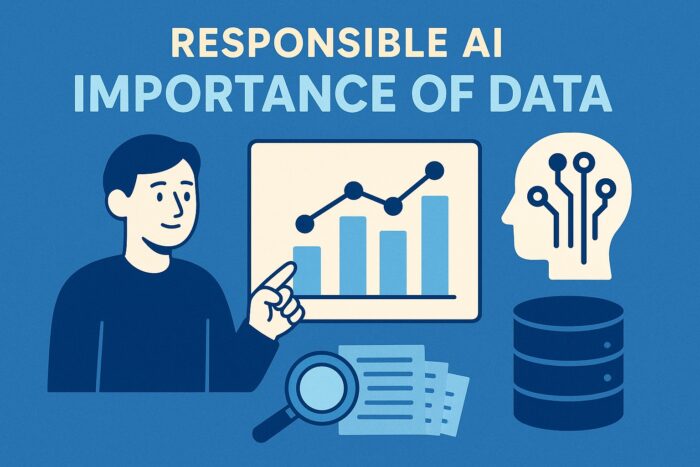
The old saying “garbage in, garbage out” has never been more relevant than it is with AI. No matter how advanced a model is, its reliability is ultimately limited by the quality, diversity, and integrity of the data it learns from. In other words, an AI system is only as fair and trustworthy as the information we feed into it.
When the training data is incomplete, unbalanced, or includes harmful material, those flaws don’t stay hidden—they show up in the model’s decisions, predictions, and interactions. And because AI operates at scale, even small issues in the data can snowball into major real-world consequences.
A few of the most common sources of data-driven bias include:
- Demographic bias:
This happens when certain groups—whether based on gender, age, race, region, or socioeconomic status—are underrepresented in the dataset. Models trained on skewed samples may perform well for some groups while consistently misinterpreting or misrepresenting others. - Temporal bias:
When data is pulled from a narrow or outdated time period, the model may struggle to understand newer patterns, cultural shifts, or emerging behaviors. This is especially problematic in fast-moving domains like finance, social media, or public health. - Content bias:
If the training material contains offensive, discriminatory, or toxic language, the model can unintentionally replicate or amplify that content. This risk is particularly high in open-ended generative models that learn patterns of human communication.
The ripple effects of these biases can be significant. Take a customer-service chatbot, for example: if it was trained primarily on conversations from male users, it may misunderstand or misinterpret the communication styles of female users, leading to worse support experiences and reinforcing inequities.
That’s why one of the most important questions to ask—whether you’re building an AI or buying one—is simple but critical: Who was represented in the training data, and who wasn’t? If a large portion of your data comes from a narrow, homogeneous source, the model’s output may consistently favor certain groups while disadvantaging others.
Responsible AI starts long before a model is deployed. It begins with thoughtful, intentional data collection—ensuring that the information used to train a system reflects the diversity, complexity, and reality of the people and environments it’s meant to serve.
Why Responsible AI Matters
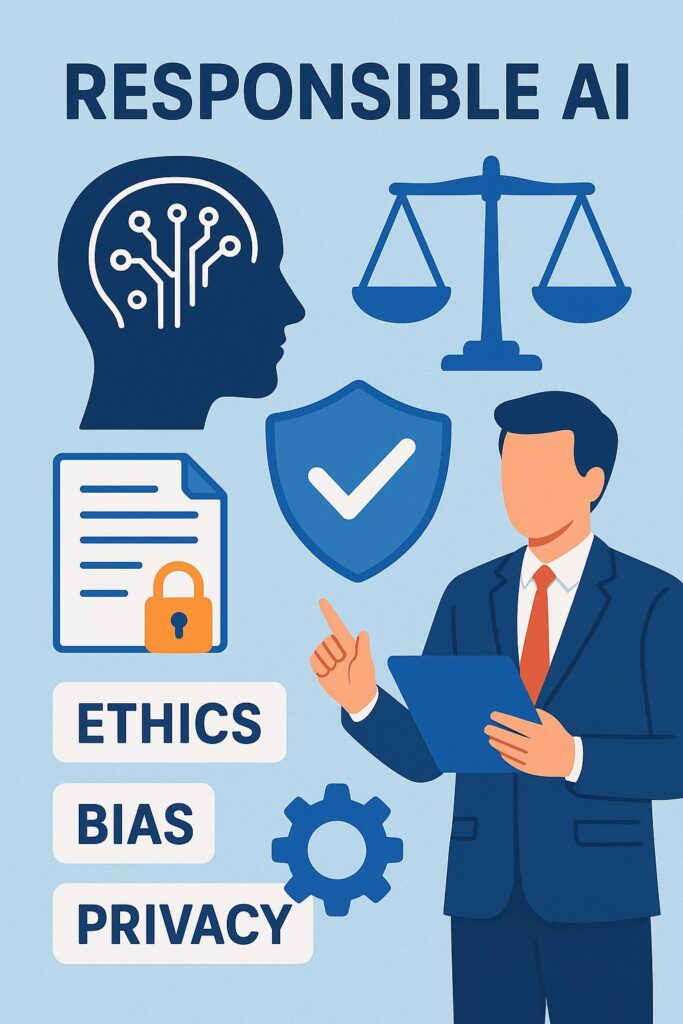
Responsible AI is not just a trendy buzzword—it is the foundation for sustainable innovation. It involves designing, training, and deploying AI systems that are fair, transparent, and trustworthy. In a world where algorithms influence hiring decisions, medical diagnoses, and financial recommendations, ethical responsibility is essential.
AI ethics go beyond code quality or model accuracy metrics. They shape how decisions are made, who is affected, and whether outcomes are equitable. Many assume AI models provide objective results because machines “don’t think” like humans. In reality, every AI system reflects the data and choices made by its designers. Biases or blind spots in data inevitably appear in AI outputs, sometimes amplified by automation.
Moreover, AI decision-making is often opaque, making it difficult to understand how conclusions are reached. This lack of transparency can erode trust, especially in critical fields like healthcare, law enforcement, and finance. Organizations must move beyond blind faith in AI predictions and ensure outputs are explainable and verifiable.
Companies that adopt ethical AI practices not only reduce operational and reputational risks but also strengthen their credibility. Customers, partners, and regulators increasingly demand transparency—and businesses that deliver it gain a competitive edge.
Practical Steps for Building Responsible AI
Creating ethical AI requires intentional design decisions and continuous monitoring. Organizations can implement the following steps:
1. Ethics Management
Before training AI models, it’s critical to curate and clean data responsibly. This includes filtering violent, explicit, or offensive content using automated tools such as content-moderation platforms or profanity filters. High-quality, ethically sourced data improves model reliability and reduces reputational risk.
2. Bias Management
Data distribution should be analyzed to detect imbalances. For instance, if 80% of the dataset comes from a single source or timeframe, the model may misinterpret emerging patterns. Mitigation strategies include rebalancing datasets, adjusting sample weights, or incorporating diverse data sources.
Not every AI system requires bias correction—for example, an industrial AI tool designed for a narrowly defined task may perform adequately on domain-specific data. However, systems that interact with humans must prioritize fairness.
3. Ethical Validation
Testing should go beyond accuracy metrics. Ethical validation involves assessing whether AI outputs align with societal, legal, and moral standards. Teams should review models periodically for unintended consequences, retrain them with updated data, and document the ethical review process.
These steps not only enhance model reliability but also demonstrate due diligence to regulators, investors, and customers.
Privacy and Compliance
Privacy remains central to responsible AI. Because models often use large volumes of personal data, organizations must comply with global regulations such as General Data Protection Regulation (GDPR) in the EU, California Consumer Privacy Act (CCPA) in the U.S., and other local laws.
Building compliance into the design process—rather than treating it as an afterthought—saves time, cost, and reputation later. Effective strategies include:
- Data de-identification: Removing or masking personal identifiers before training.
- Encryption and secure storage: Protecting sensitive information at every stage of data handling.
- Access control and audit trails: Ensuring only authorized users can interact with AI models and data pipelines.
Regular compliance audits and transparency reports help maintain accountability and public trust.
Responsible AI as a Strategic Advantage
Ethical AI is not just technical—it’s a strategic business advantage. Companies prioritizing fairness, transparency, and accountability are better positioned to build longer‑term customer loyalty and survive regulatory scrutiny.
Building an AI governance framework is essential—it defines roles and responsibilities, monitors performance, and aligns AI outcomes with corporate values. This governance not only prevents harm but also sets the foundation for trustworthy innovation. As AI becomes central to operations, trust becomes a differentiator.
If you’re working in business or leadership: view ethics not as a cost or constraint, but as a competitive asset. Transparent AI systems generate better stakeholder trust, reduce risk, and can open new market opportunities.
Conclusion
Responsible AI does not slow progress; it ensures that progress is sustainable. By integrating ethical principles into data collection, model training, and deployment, businesses can innovate with confidence.
In the coming years, ethical AI will guide collaborations between governments, corporations, and individuals. We can expect more transparent models, stronger data governance, and AI systems designed to amplify human intelligence rather than replace it.
Ultimately, responsible AI is more than a technical best practice—it is a business imperative. It supports long-term sustainability, enhances brand reputation, and preserves public trust. When ethics guide innovation, AI becomes not only smarter—but truly transformative.