
How AI Agents Are Redefining the Future of Computing
Since the rise of smartphones, most of our digital lives have operated within the framework of apps. Whether we wanted to shop, navigate, communicate, or manage finances, we relied on downloading and opening specific apps for each purpose. This app-centric model became the default interface for digital interaction, shaping not only user behavior but also the structure of the entire tech ecosystem.
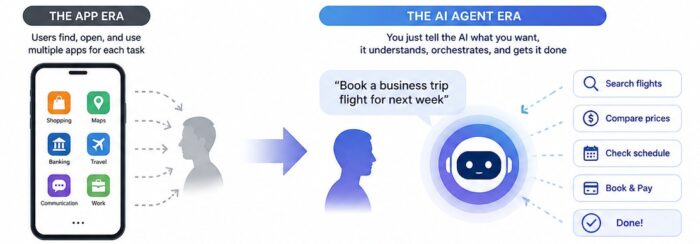
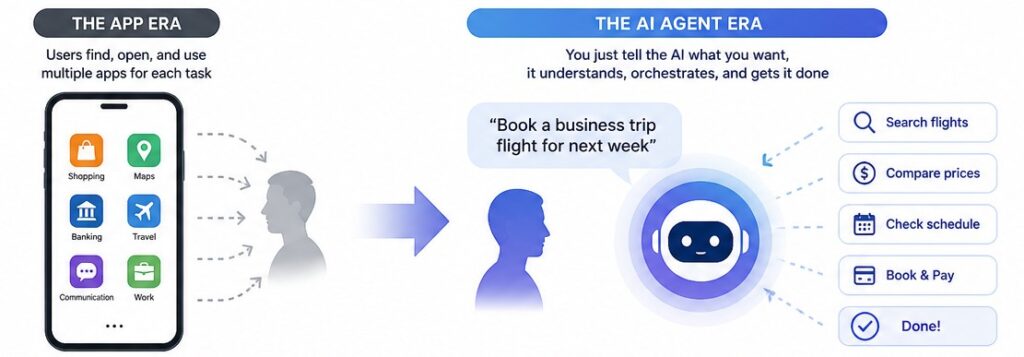
However, the emergence of AI agents is fundamentally challenging this long-standing paradigm. Users no longer need to open individual apps to perform tasks. Instead, they can simply express what they want in natural language, and the AI handles the rest. For instance, when a user says, “Book me a flight for next week,” an AI agent can search for flights, compare prices, check availability, and complete the booking—all without the user ever interacting with a specific app. In many cases, users may not even realize which services were used behind the scenes.
If this trend continues to evolve, it could ultimately lead to a world where a single AI-powered “Super App” replaces the entire app ecosystem. As suggested in emerging industry discussions (finance.biggo.com), this Super App would not just aggregate multiple services but would act as a unified digital interface that manages nearly every aspect of a user’s life. This shift represents more than a technological upgrade—it signals a complete transformation in how we interact with computing systems.
Super App – AI Agent: What This Shift Really Means
1. Technical Perspective: From UI-Based to Intent-Based Computing
From a technical standpoint, this transition represents a shift from user interface (UI)-based computing to intent-based computing. Traditionally, users had to navigate screens, locate specific features, and manually execute tasks. The process required multiple steps, often involving different apps and interfaces.
In contrast, AI agents interpret user intent and automatically orchestrate the necessary systems to deliver results. Instead of interacting with interfaces, users simply communicate their goals. This fundamentally changes the role of apps. They are no longer the primary interface but instead become modular “capabilities” that AI agents can call as needed.
This shift is already visible in modern AI systems. Tools like Microsoft Copilot, Google’s AI assistants, and OpenAI-powered applications are beginning to integrate workflows across multiple services.
As this approach matures, it is likely to influence operating systems themselves. Rather than being designed around launching apps, future systems may evolve into “Agent OS” environments where AI coordinates and executes tasks seamlessly across multiple services.
2. Social Perspective: The Shift in Platform Power
Beyond technology, this transformation also represents a significant shift in platform power. For over a decade, digital ecosystems have been dominated by app distribution platforms such as Apple’s App Store and Google Play. These platforms controlled how users discovered, installed, and interacted with digital services, creating a centralized model of influence.
With the rise of AI agents, this dynamic begins to change. Users no longer choose apps directly; instead, AI agents select and execute services on their behalf. This shifts the center of power from app stores to AI platforms.
In this new environment, companies may no longer compete primarily through standalone apps. Instead, they will need to position themselves as service providers that can be easily integrated and invoked by AI systems. This could lead to a more API-driven economy, where success depends on being selected by AI agents rather than downloaded by users.
Industry forecasts support this shift. Gartner predicts that by 2026, 40% of enterprise applications will include AI agents, and by 2028, a significant portion of user experiences will shift from traditional apps to agent-based interfaces. (Source: Gartner, 2025) This indicates a clear movement toward AI-mediated experiences and a restructuring of the digital ecosystem.
3. User Perspective: Simplicity vs. Control
From the user’s perspective, the impact of AI agents is both transformative and nuanced. Traditional digital experiences required multiple steps—opening apps, logging in, navigating menus, and executing actions. While functional, these processes were often repetitive and inefficient.
AI agents eliminate much of this friction. Users can simply state their desired outcome, and the system handles the execution. This leads to a more intuitive and streamlined experience, significantly improving productivity and reducing cognitive load.
However, this convenience introduces a new challenge. As AI takes over more tasks, users become less involved in the process. This can reduce their visibility into how decisions are made and which services are being used. Over time, this may lead to a diminished sense of control.
The result is a new balance that must be managed carefully: convenience versus control. While users benefit from efficiency, they must also remain aware of how much autonomy they are giving to AI systems.
Benefits and Risks of the Super App Model
The Super App model powered by AI agents offers substantial advantages, but it also introduces meaningful risks. On one hand, the convenience is unparalleled. Users no longer need to switch between multiple apps, and complex tasks can be completed with a single request. AI agents can also deliver highly personalized experiences by integrating data across different contexts, effectively acting as a digital personal assistant.
On the other hand, the risks cannot be ignored. One of the most critical concerns is the concentration of power. When a single Super App controls multiple services, it can create monopolistic dynamics and limit user choice. Additionally, centralization introduces a single point of failure. If the system experiences an outage or an account is compromised, users may lose access to a wide range of services simultaneously.
Privacy is another major concern. AI agents require access to extensive amounts of personal data, including financial information, health records, and behavioral patterns. While this enables better personalization, it also increases the risk of data misuse or overexposure.
Finally, there is the risk of over-reliance on AI. As users delegate more decisions to AI systems, their own decision-making abilities may weaken over time. This raises important questions about the long-term impact of automation on human behavior.
How Do We Control It?
In the AI agent era, data becomes the foundation of trust. Because AI systems rely entirely on data to function, the way data is managed directly determines the reliability and credibility of the system.
From a service provider’s perspective, data security must be treated as a top priority. Sensitive information such as financial data, health records, and personal schedules requires robust protection through encryption and secure architecture.
In addition to security, data minimization is essential. While it may seem efficient to centralize all data, doing so increases risk. Organizations should collect only the data they truly need and isolate sensitive information wherever possible. Transparency is equally important. Users should be informed about how their data is being used, and systems should provide clear reporting on AI-driven actions.
From the user’s perspective, proactive data management is equally critical. Users must actively control what data AI agents can access and define clear boundaries for their actions. For example, an AI agent may be allowed to book travel arrangements automatically, but financial transactions might require explicit user approval.
Ultimately, the key question in the Super App era is simple yet profound: who controls the data? The answer to this question will determine not only user trust but also the competitive landscape of the AI ecosystem.
Conclusion
The rise of AI agents is not merely a shift from one type of application to another. It represents a fundamental redefinition of computing itself. We are moving from a world where users interact with apps to one where they communicate intentions.
This transition brings significant benefits, including greater convenience, improved productivity, and more personalized experiences. At the same time, it introduces new challenges related to control, privacy, and platform dependency.
In the future, success will not be defined by who builds the most apps, but by who creates the most trustworthy AI systems. Trust, transparency, and data control will become the defining factors of the next generation of digital experiences.
At the center of it all lies one critical element: data. How it is managed, protected, and controlled will shape the future of AI—and the future of computing itself.